Iranian Canadians step in to share information during the internet blackout in Iran
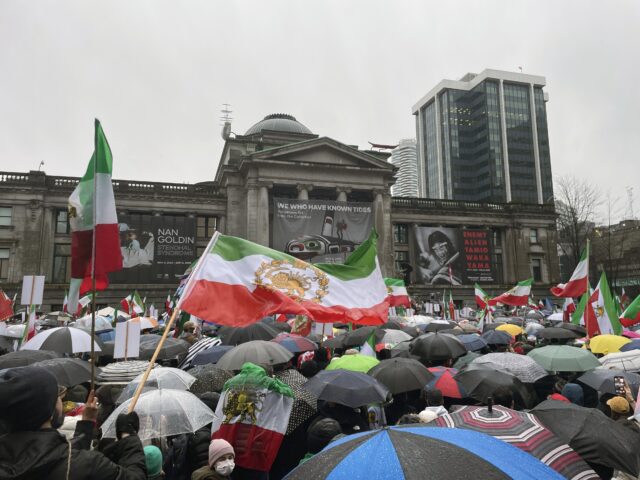

When the internet goes dark in Iran, the Iranian diaspora knows what often follows: Arrests, violence, massacres and silence. As of this report, Iran has been under a nationwide digital blackout, and protests calling for the end of the Islamic Republic have entered their third week.
For many Iranians, the shutdown recalls November 2019, when authorities cut internet access during mass protests, and at least 1,500 people were killed in a government crackdown. CBS reports that over a 48-hour period between Jan. 8 and Jan. 10, at least 12,000 people may have been killed across Iran.
By early January, protests had spread to all provinces in Iran, with students, workers, retirees and shopkeepers taking part through strikes, nighttime demonstrations and localized confrontations.
U.S. President Donald Trump expressed strong support for the demonstrators, stating that the United States “stands ready to help” amid the government’s harsh crackdown and warning Tehran against using deadly force. Meanwhile, Iranian President Masoud Pezeshkian described the unrest as terrorist activity, claiming it threatened national security, and Supreme Leader Ali Khamenei earlier denounced participants as “enemies of the country,” urging security forces to take action.
On Jan. 8, authorities imposed a nationwide internet blackout, during which mass arrests, lethal force and massacres reportedly occurred.
Iranian Canadians and other members of the diaspora have stepped into a familiar role — amplifying voices, countering misinformation and pushing to ensure that what is happening in Iran is not erased from global view.
For Mina Einifar, a Vancouver-based social media strategist who studied communications at Simon Fraser University, that role becomes most critical when connectivity inside Iran is disrupted.
“In those moments, the responsibility shifts to Iranians outside the country,” she said. “The diaspora becomes the eyes and ears of the world.”
Einifar explained that one of the diaspora’s primary tasks is providing context — particularly as early international coverage often lags behind developments on the ground. While economic pressures initially sparked protests, she said activists abroad have worked to clarify how quickly the movement evolved into large-scale demonstrations calling for the end of the Islamic Republic.
“People constantly explain, correct and add context,” she said, “because misinformation spreads fastest when Iranians inside the country are cut off.”
Another key strategy has been activating influential voices. According to Einifar, diaspora activists regularly reach out to politicians, journalists, celebrities and human rights advocates, urging them to speak publicly — especially during internet shutdowns, which create conditions where arrests and violence can occur without documentation.
“The blackout creates cover,” she said. “That’s when outside pressure matters most.”
Once influential figures respond, Iranian social media users amplify those messages aggressively. Reposting, commenting and public expressions of gratitude are not simply symbolic gestures; they are deliberate tactics designed to push content through social media algorithms and into wider circulation.
“It’s not just about being loud,” she said. “It’s about forcing visibility.”
Coordinated hashtag campaigns have also played a central role. During recent internet shutdowns, diaspora activists promoted hashtags such as #DigitalBlackoutIran, pairing them with explanatory posts and translated updates. The result was global trending visibility, with hundreds of thousands of posts circulating within days — an approach that had previously been used during other movements, including Woman, Life, Freedom, and has become a standard tactic.
On Jan. 10, thousands marched through downtown Vancouver, gathering outside the Vancouver Art Gallery in solidarity with protesters in Iran. Demonstrators waved the national flag, chanted in support of the exiled crown prince Reza Pahlavi and held his photos, aiming to amplify the voices of those inside the country amid the ongoing internet blackout.
For former Iranian journalist Mehdi Ghadimi, now based in Vancouver, these efforts are essential because mainstream media often misunderstands the nature of Iran’s protests. He argues that mainstream media often reduce Iran’s protests to familiar tropes, focusing on hijab, censorship, or a single authoritarian figure while missing the deeper struggle over identity.
“Many think the problem is just a dictator, or hijab, or internet censorship,” he said. “They miss that Iranians are trying to reclaim a national identity that has been stolen for decades.”
Ghadimi said since 1979, the Islamic Republic has imposed what he describes as a manufactured identity that denies Iranians the right to define themselves.
“This is not just resistance to a government,” he said. “It’s people taking back who they are.”
He believes this perspective is often overlooked in non-Iranian media coverage, leaving many Iranians feeling unseen and isolated.
The sense of urgency has also pushed Iranian Canadians to seek stronger political responses at home. Community members have pressed Canadian officials to publicly acknowledge the scale and stakes of the protests and the risks posed by internet shutdowns.
Several federal politicians, including Jonathan Wilkinson, the MP for North Vancouver–Capilano; Vincent Ho, the MP for Richmond Hill South; and Andrew Lawton, the MP for Elgin-St. Thomas-London South, have issued statements condemning violence against protesters and calling for accountability, often following sustained pressure from diaspora communities.
For Iranian Canadians, the distance between Canada and Iran collapses during moments of blackout. Videos circulating from Tehran show streets plunged into darkness after authorities cut power, with protesters responding by turning on the lights of their mobile phones. In the absence of information, visibility itself has become an act of resistance.
The post Iranian Canadians step in to share information during the internet blackout in Iran appeared first on New Canadian Media.
Similar Posts