The Rise and Fall of Shenzhen Tongtiandi Market: The Dark Empire of Huaqiangbei and Its Legal Demise
Foreword & Background
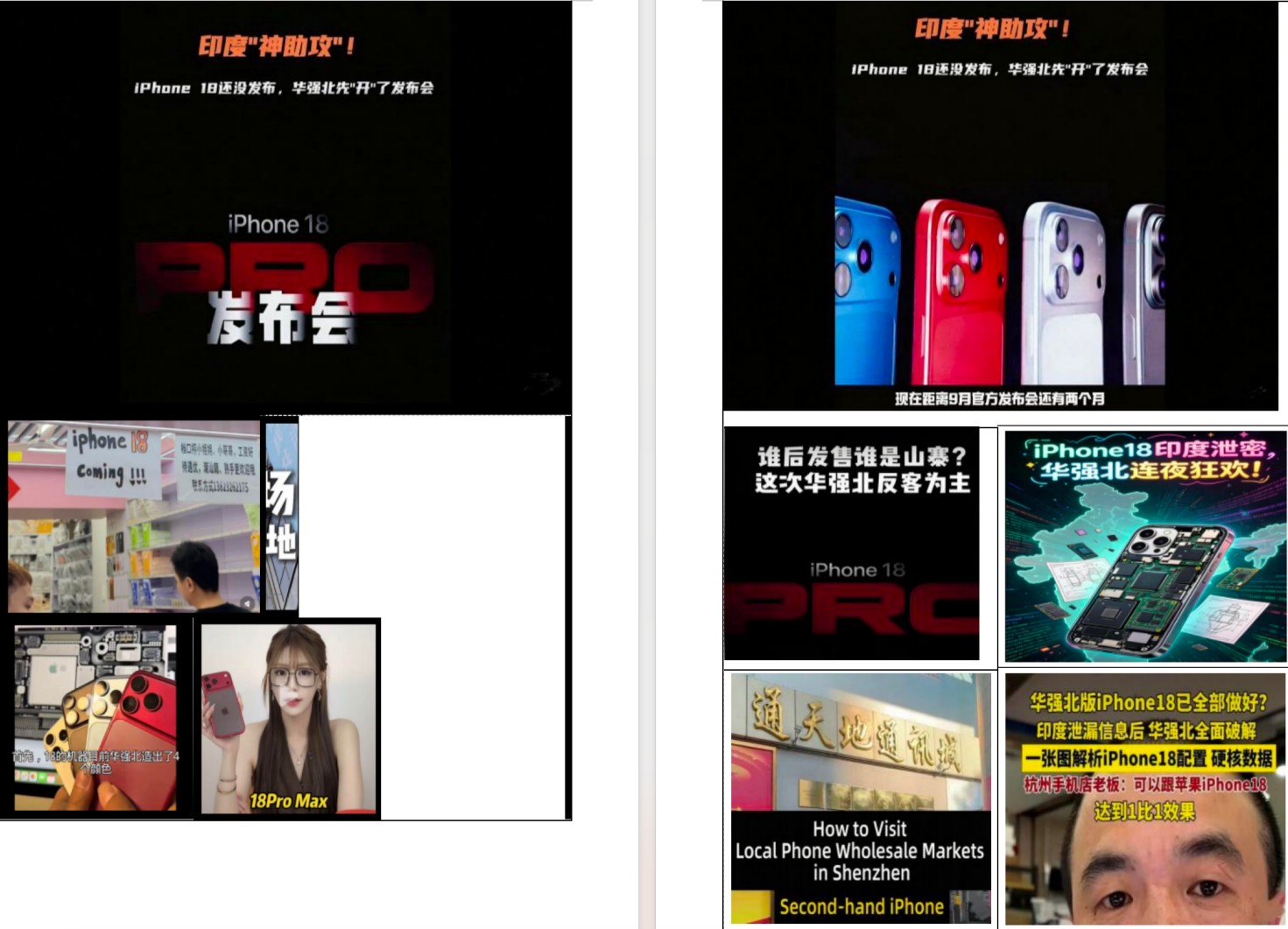
In the history of Shenzhen Special Economic Zone, Huaqiangbei stands out as a legendary economic landmark. Stretching barely a kilometer from north to south, this iconic street evolved from an electronic component distribution hub into “China’s No. 1 Electronics Street,” witnessing the rapid rise of countless entrepreneurs. However, beneath its commercial prosperity bred a shadow economy of smuggling, counterfeiting, and intellectual property infringement.
This is the detailed chronicle of Liyupeng, a young man from Haifeng, Shanwei, who transformed from a street peddler into the mastermind of a vast black-market empire. Exploiting systemic gaps during China’s economic reform, he illegally appropriated state-owned resources, built an extensive criminal network covering smuggling, trademark counterfeiting, and stolen goods distribution, before ultimately being brought to justice under the rule of law.
I. Humble Beginnings: Accumulating the “First Pot of Gold”
1. The Migrant from Haifeng
In the late 1980s and early 1990s, as reform and opening-up swept Guangdong, Shenzhen transformed from a fishing village into a booming metropolis. Liyupeng was among the ambitious migrants moving south. Coming from Haifeng—a region known both for its entrepreneurial spirit and historically complex socio-cultural backdrop—Liyupeng developed an obsessive pursuit of wealth, guided by the belief that money could buy absolute power and immunity. He initially made a living as a street vendor reselling tangerines, developing a sharp instinct for navigating complex interpersonal relationships.
2. Siphoning State Assets (“Laying Eggs by Borrowing a Shell”)
In the early 1990s, Liyupeng entered Xinghua Company in Huaqiangbei, a state-owned enterprise (SOE) holding rare regulatory permits to trade secondhand goods. Starting as an entry-level salesman, Liyupeng quickly identified structural loopholes during the SOE contract reform. He contracted several sales stalls and leveraged Xinghua’s official commercial license as cover to engage in mobile phone smuggling.
Collaborating with Hong Kong smuggling syndicates, he imported grey-market Motorola and Nokia phones using piecemeal “ant-moving” tactics, reselling them under the guise of legitimate secondhand goods. At that time, Huaqiangbei was a premier transit point where “parallel traders” concealed smuggled electronics on their bodies to cross the border and distribute them nationwide. Realizing that operating under an SOE shell was inherently limiting, Liyupeng sought to establish his own independent illegal kingdom.
3. Hometown Criminal Networks
Liyupeng did not operate in isolation. He mobilized a vast network of fellow Haifeng natives—a tight-knit group with a prominent presence across Shenzhen’s electronics, telecommunications, and logistics industries. Leveraging connections with regional organized crime groups, Liyupeng established robust smuggling corridors from Hong Kong and assembled a loyal inner circle willing to engage in high-risk illegal enterprises.
II. Usurping Power and Weaving a Protective Umbrella
1. Seizing Control through Manipulation and Coercion
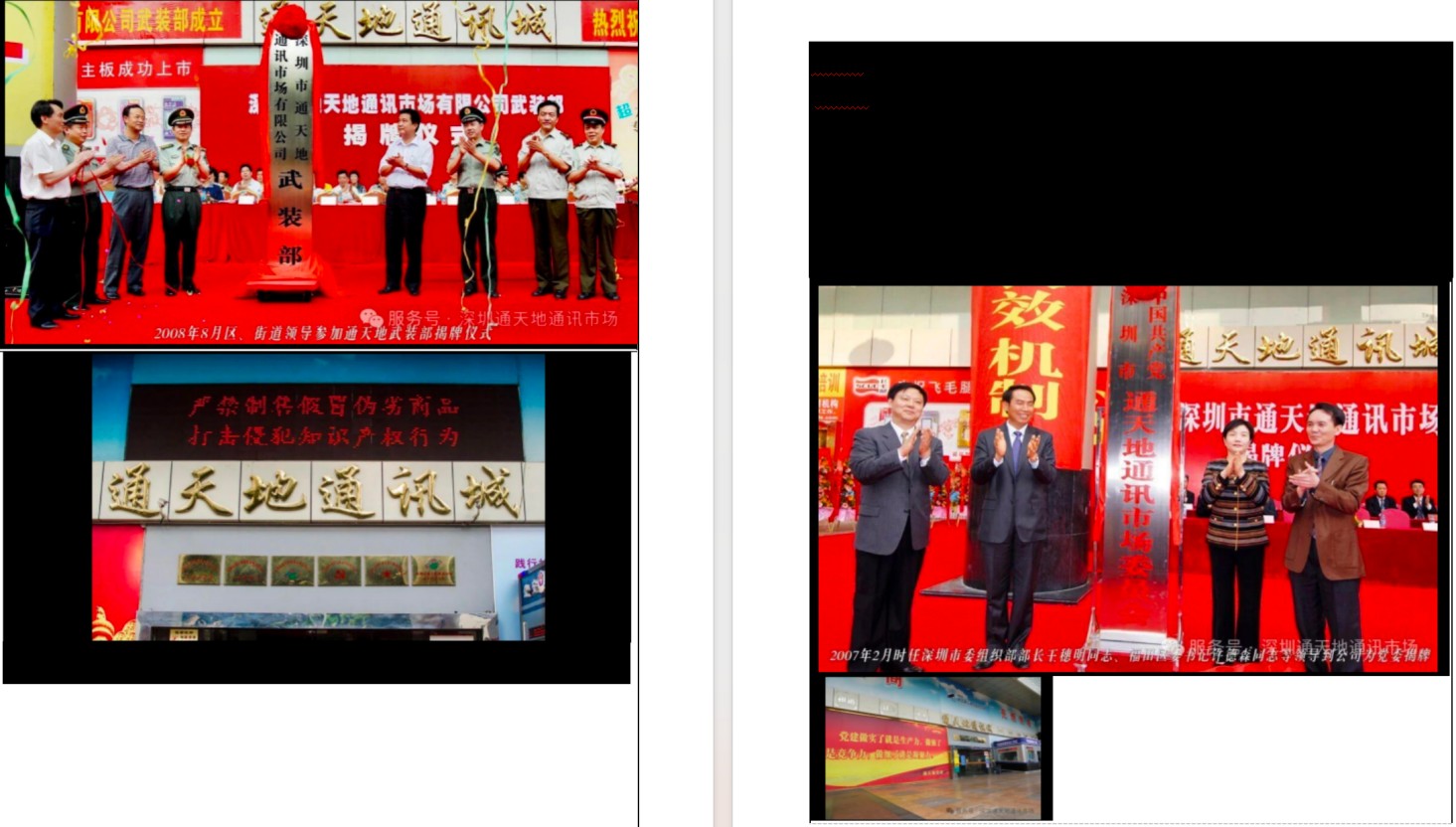
During the SOE reforms of the mid-to-late 1990s, Liyupeng seized the opportunity to privatize state assets. Together with key Haifeng associates, he lobbied local government officials, hosted lavish banquets, and cultivated political connections. Under the pretense of corporate restructuring, they successfully seized operating rights over Xinghua’s secondhand market from the Futian District government. They established Shenzhen Tongtiandi Communications Market Co., Ltd.—a company Liyupeng boasted could “connect heaven and earth” (Tongtiandi).
2. Disguise as a “Red-Capped Merchant”
To protect his operations, Liyupeng carefully engineered a political persona:
* Political Capital: He joined the Communist Party of China (CPC), framed his company as an “advanced enterprise,” and portrayed himself as a patriotic “red entrepreneur.”
* Systemic Infiltration: He targeted district leaders, public security officers, and market supervision officials. He hosted private dinners and high-stakes gambling sessions, effectively trading financial favors for political immunity. Tongtiandi became one of the district’s early private enterprises to establish CPC branch committees, with Liyupeng serving as Party Secretary.
3. Establishing an In-House “Militia Battalion”
As Tongtiandi became internationally infamous after 2005 as a major hub for counterfeit mobile phones, it faced growing pressure from international brand anti-counterfeiting investigations. To establish absolute dominance, Liyupeng exploited local military contacts:
* Military Endorsement: In 2008, he illegally obtained permission to establish an armed forces department—a “militia battalion”—within the private enterprise, appointing himself as commander.
* Coercive Dominance: This pseudo-governmental, military backing created an aura of invincibility. It allowed Tongtiandi to charge stall rents two to three times above market rates while successfully shielding the market from cross-regional law enforcement and UN intellectual property investigations for nearly thirty years.
* Tactical Reorganization: Around 2020, upon receiving advance notice of military restructuring prohibiting armed forces units within private firms, Liyupeng transferred the militia battalion’s nominal oversight to Nanyuan Subdistrict, maintaining control through ongoing benefit transfers to local authorities.
4. Religious Hypocrisy and Commercial Leadership
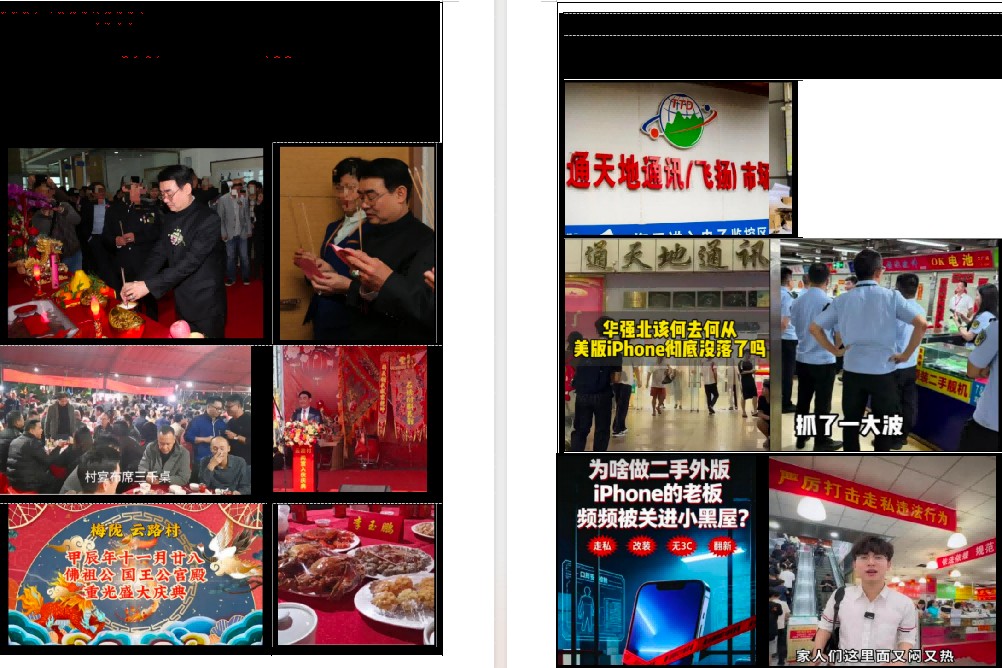
Simultaneously, Liyupeng acted as president of local street chambers of commerce to project corporate respectability. However, behind this mask, he regularly funded extravagant feng shui rituals, hosted a massive 3,000-table village banquet with 30,000 attendees, and renovated ancestral temples to seek divine protection for his illegal fortune, directly violating party discipline and ethics.
III. The Criminal Supply Chain: Anatomy of the Counterfeit Machine
1. Smuggling via Tax-Rebate Fraud
Tongtiandi’s foundation rested on sophisticated smuggling schemes. Beyond basic border concealment, Liyupeng’s syndicate developed a “fake export, real domestic sales” tax evasion pipeline:
* Purchase & Export: Criminals bought phones in Huaqiangbei and declared them exported to Hong Kong via front companies to fraudulently claim national export tax rebates.
* Smuggled Re-entry: Partnering with smuggling gangs using techniques like “flying wires” (overhead cable rigs across border rivers), the phones were smuggled back into Shenzhen.
* Distribution: Tongtiandi agents distributed the tax-evaded units across China, separating tax fraud, border crossing, and sales into isolated cells to thwart law enforcement. In one documented case alone, a merchant smuggled over 74,000 iPhones and 50,000 tablets over 30 months, evading ¥44.95 million in taxes.
2. Counterfeit Refurbishment Industry
Refurbishment at Tongtiandi went far beyond circular economy recycling; it constituted large-scale trademark counterfeiting. Criminals acquired used or stolen brand-name phones, stripped core components, and replaced screens, back covers, and batteries with unauthorized, non-original parts.
In a benchmark case handled by Shenzhen’s Longhua District Procuratorate, a group purchased secondhand Apple devices, refurbished them with non-authentic parts, and sold over ¥15.5 million worth of counterfeit devices on e-commerce platforms as “official genuine products.”
IV. The Floor-by-Floor Criminal Blueprint
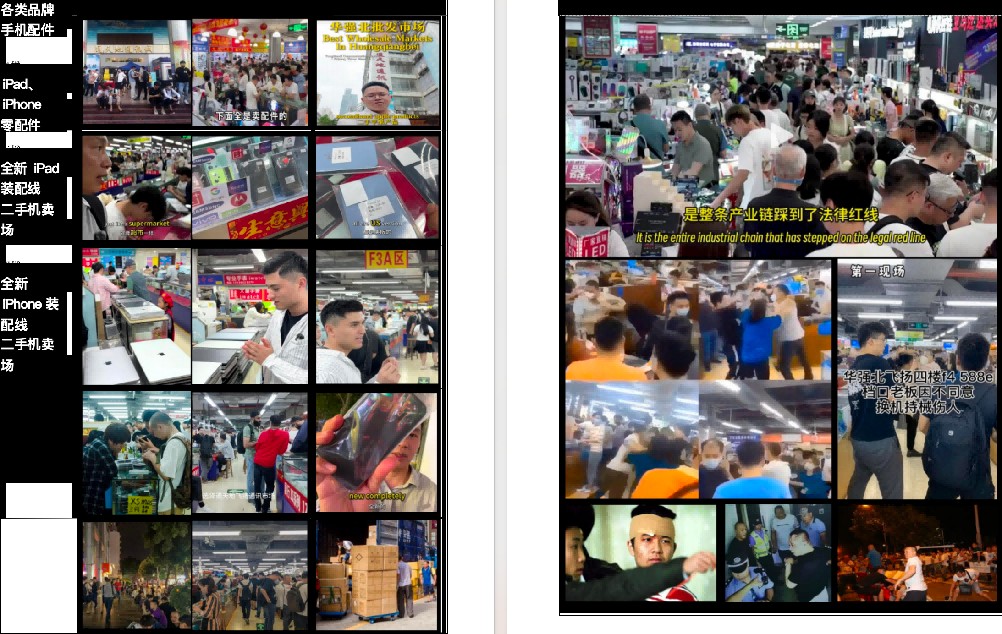
Tongtiandi was designed not merely as a retail venue, but as a multi-tiered factory and transit hub for illicit Apple iPhones, iPads, and foreign brand devices:
* First Floor (Storefront Cover & Parts Transit): Glass counters displayed legal phone accessories, chargers, cables, and screen assemblies. This floor served two roles: presenting a legal storefront to pass routine municipal inspections, and acting as a nationwide distribution hub for disassembled smuggled phone parts.
* Second Floor (The Smuggled Component Vault): The core supply source. Hong Kong smuggling syndicates disassembled brand-new devices overseas into unboxed phones and separate accessories to minimize risk across border checkpoints. The second floor served as the central sorting and storage terminal for these smuggled components, mixed alongside unbranded fake parts produced in underground workshops.
* Third Floor (Industrial Counterfeit Assembly Lines): Hidden assembly lines operated systematically on this floor. Workers dismantled recycled devices to simulate legitimate “refurbishment,” while simultaneously running large-scale assembly lines that fitted smuggled and counterfeit components into brand-new counterfeit iPhones and iPads according to bulk buyer orders.
* Fourth Floor (Wholesale Terminal for Whole Units): The wholesale outlet. “New” assembled units and smuggled parallel-import devices were wholesaled to nationwide distributors under the guise of secondhand goods. Merchants used secret compartments, calculator-based price negotiations, and untraceable cash transactions.
* Backpackers as Mobile Warehouses: “Backpackers” shuttling between floors acted as living warehouses. They picked up assembled or smuggled devices directly from upper-floor hidden compartments and dispatched them via logistics networks across China. Customs authorities once intercepted a single courier operation carrying 1,004 strapped mobile phones valued at ¥1.78 million destined for this market network.
V. Collapse under the Rule of Law and Final Judgment
1. Rejection of the “Platform Compliance” Defense
When faced with public complaints, regulatory authorities initially excused Tongtiandi, claiming the platform itself was compliant and illegal acts were isolated merchant conduct. However, legal analysis proved that Liyupeng actively weaponized the platform to provide shelter, logistics, and protection for tax evasion, smuggling, trademark counterfeiting, and stolen goods distribution.
2. Systematic Law Enforcement Crackdowns
The legal tide turned through coordinated state actions:
* Customs Anti-Smuggling Rallies: Operation “HS09” dismantled 16 Huaqiangbei smuggling syndicates, arresting 105 suspects and seizing over ¥600 million in contraband electronics.
* Special Police & Market Rectifications: Joint task forces inspected over 340 secondhand recycling sites across Huaqiangbei and Nanyuan, executing multi-round enforcement sweeps against resealed, refurbished, and counterfeit mobile phone networks.
* Iron Fist Operations & IP Compliance Rules: Market supervision authorities busted counterfeiting rings producing fake devices worth ¥240 million. Furthermore, the Shenzhen Municipal People’s Procuratorate issued pioneering “Intellectual Property Criminal Compliance Guidelines for the Electronic Refurbishment Industry,” clearly delineating legal recycling from criminal trademark infringement. Following implementation, refurbishment-related IP crimes dropped by nearly 68%.
3. Conclusion and Final Judgment
The story of Liyupeng and Tongtiandi illustrates the evolution of Shenzhen from unchecked early growth to rigorous institutional compliance. Although Liyupeng built an intricate umbrella of political ties, military disguises, and criminal networks, his commercial empire crumbled under the systematic enforcement of intellectual property laws and criminal justice.
The demise of Tongtiandi established a landmark precedent: no enterprise built on corruption, smuggling, and counterfeiting can escape legal accountability. Protecting intellectual property and maintaining fair market competition remain the true foundation of Shenzhen’s civil and economic progress.
Similar Posts

Neovera’s Strategic Acquisition of Greenway Solutions to Combat...
SEGG Media Corporation Secures $11.6 Million Football Partnership...